
Ailing / Failing Implants
Key Takeaways: Saving Your Dental Implant Investment
- Recognizing the difference between an “ailing” implant (reversible condition) and a “failing” implant (severe damage) can be the difference between saving and losing your dental investment.
- Early intervention is crucial—90% of implants with early-stage problems can be successfully treated when addressed promptly.
- Peri-implantitis, the most common cause of implant failure, can often be managed with specialized treatments at Sound Surgical Arts in Tacoma.
- Daily specialized cleaning techniques and regular professional maintenance significantly reduce implant complications.
- A dual-specialty approach combining periodontics and oral surgery expertise provides comprehensive treatment options for implant complications.
Dental implants have revolutionized tooth replacement, providing a permanent solution that looks, feels, and functions like natural teeth. But like natural teeth, implants aren’t immune to complications. Catching problems early can mean the difference between a simple fix and complete implant loss.
At Sound Surgical Arts, we specialize in diagnosing and treating ailing and failing dental implants throughout Tacoma, Gig Harbor, and Vashon Island. Our team combines expertise in both periodontics and oral surgery to provide comprehensive implant rescue treatment, often saving implants that other practices might deem unsalvageable.
Warning Signs Your Dental Implant Needs Help Now
Dental implants boast impressive success rates of 95-98% when properly placed and maintained. However, complications can and do occur. The key to successful treatment lies in early detection and prompt intervention. If you’re experiencing tenderness, bleeding, or visible changes around your implant, these aren’t normal conditions to “wait and see” about.
Warning signs requiring professional evaluation include gum recession around the implant, bleeding when brushing, persistent bad taste or odor, visible metal threads of the implant, discomfort when chewing, or any mobility of the implant or crown. These symptoms indicate inflammation or infection that, if left untreated, can progress from an easily manageable condition to complete implant failure.
Ailing vs. Failing: What’s Happening to Your Dental Implant?
Understanding the distinction between an “ailing” implant and a “failing” implant is crucial for proper treatment planning. These terms represent different stages on a continuum of implant complications, with dramatically different prognoses and treatment approaches.
Early Warning Signs of Implant Problems
An ailing implant shows early signs of trouble but maintains its integration with the bone. The hallmark characteristic is inflammation limited to the soft tissues surrounding the implant—a condition called peri-implant mucositis. Think of this as the implant equivalent of gingivitis around natural teeth. At this stage, the bone supporting the implant remains intact, and the implant itself is still firmly anchored.
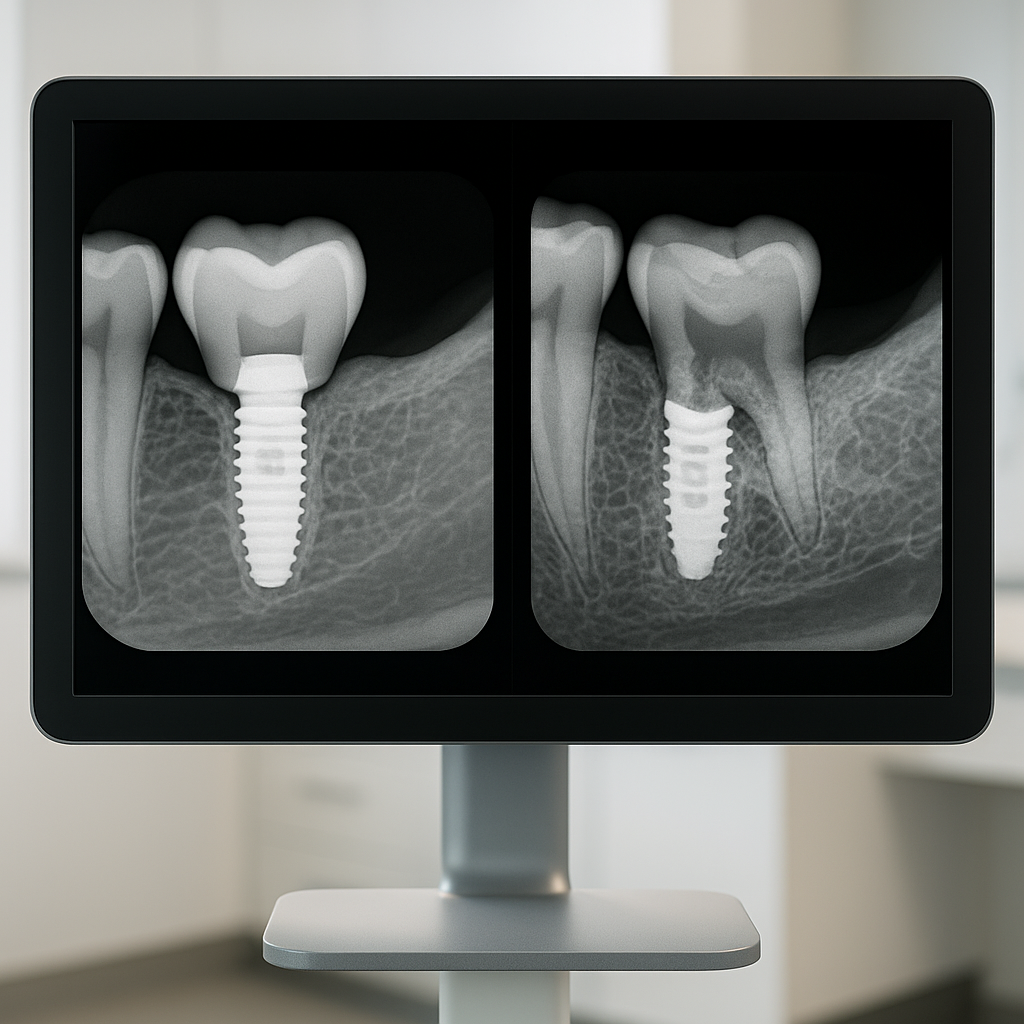
Clinical signs of an ailing implant include redness, swelling, bleeding on gentle probing, and possibly some discomfort. Radiographs (X-rays) typically show no significant bone loss at this stage. The good news? Peri-implant mucositis is completely reversible with proper treatment and improved home care.
Early intervention for ailing implants often involves professional cleaning around the implant, antimicrobial therapy, and modifications to your home care routine. When caught at this stage, the prognosis is excellent, with most implants responding well to non-surgical treatment.
When an Implant is Truly Failing
A failing implant represents a more advanced condition characterized by progressive bone loss around the implant (peri-implantitis) that threatens its structural stability. This is the implant equivalent of periodontitis around natural teeth, but it often progresses more rapidly and unpredictably.
The distinguishing feature of a failing implant is the combination of inflammation and progressive bone destruction. As bone support diminishes, the implant may develop mobility, which is a late-stage sign indicating severe compromise. X-rays will reveal a pattern of bone loss, often in a crater-like formation around the implant.
The Critical Difference Between Peri-Implant Mucositis and Peri-Implantitis
- Peri-implant mucositis: Reversible inflammation limited to soft tissues with no bone loss
- Peri-implantitis: Inflammatory process affecting both soft tissues and the supporting bone
- Progression rate: Without treatment, about 43% of implants with mucositis will progress to peri-implantitis within 5 years
- Detection methods: Periodontal probing, bleeding assessment, radiographic evaluation
- Treatment approach: Mucositis typically responds to non-surgical therapy, while peri-implantitis usually requires surgical intervention
The distinction between these conditions guides our treatment approach. Early-stage problems (mucositis) can often be managed non-surgically, while more advanced cases (peri-implantitis) typically require surgical intervention to access and treat the affected surfaces of the implant and regenerate lost bone.
Why Dental Implants Fail: Common Causes in Tacoma Patients
Dental implant complications don’t happen randomly. Understanding the underlying causes helps both in prevention and targeted treatment. At Sound Surgical Arts, we’ve identified several common factors that contribute to implant problems among our Tacoma area patients.
The good news is that many of these risk factors can be controlled or modified with proper planning, maintenance, and lifestyle adjustments. Early identification of your personal risk factors allows for customized prevention strategies to protect your implant investment.
Poor Oral Hygiene and Bacterial Infection
Just like natural teeth, dental implants require consistent, thorough cleaning to remain healthy. While the titanium implant itself can’t decay, the surrounding tissues remain vulnerable to bacterial infection. Plaque biofilm that accumulates around implants contains different bacterial compositions than what forms around natural teeth, often more aggressive and destructive.
Peri-implantitis, the inflammatory process destroying bone around implants, is primarily driven by bacterial infection. Studies show that patients with a history of periodontal disease face a significantly higher risk of developing peri-implantitis, highlighting the importance of controlling oral bacteria both before and after implant placement.
Specialized home care techniques using appropriate tools like interdental brushes, water flossers, and antimicrobial rinses can dramatically reduce bacterial load around implants. Your maintenance routine should be tailored to your specific implant restoration and risk profile.
Mechanical Issues: Grinding, Bite Problems, and Implant Overload
Dental implants lack the shock-absorbing properties of natural teeth with their periodontal ligament. This makes them particularly vulnerable to excessive forces. Bruxism (teeth grinding), clenching, and improper bite alignment can create destructive pressure that leads to complications ranging from screw loosening to implant fracture or bone loss.
In some cases, prosthetic designs that distribute forces improperly across multiple implants can create areas of excessive pressure. This biomechanical overload can trigger bone loss even in the absence of infection. Our treatment planning takes careful consideration of these force factors, often incorporating protective night guards for patients with grinding habits.
Medical Conditions That Threaten Implant Success
Certain systemic conditions significantly impact implant health and healing. Uncontrolled diabetes impairs wound healing and increases susceptibility to infection. Osteoporosis and medications like bisphosphonates can affect bone metabolism and integration. Autoimmune disorders often involve inflammatory processes that can negatively influence the implant-bone interface.
Smoking remains one of the most significant controllable risk factors, reducing blood flow to healing tissues and dramatically increasing failure rates. Studies show smokers experience implant failure at 2-3 times the rate of non-smokers. At Sound Surgical Arts, we work closely with your medical providers to optimize health conditions that might impact implant healing.
Improper Placement or Restoration Factors
Technical factors during implant placement or restoration can set the stage for future complications. Inadequate bone volume, poor implant positioning, insufficient implant size, or inappropriate prosthetic design all increase failure risk. Implants placed too close together or to natural teeth make effective cleaning difficult and create vulnerability to infection.
Cement-retained restorations carry a particular risk when excess cement is left undetected beneath the gumline, creating a persistent irritant that triggers inflammation. Our digital planning protocols and surgical guides help ensure precise implant positioning that accounts for both surgical and prosthetic considerations.
5 Symptoms That Require Immediate Attention
Recognizing warning signs early dramatically improves treatment outcomes. If you experience any of these symptoms, contact our office without delay for prompt evaluation.
1. Pain or Discomfort Around Your Implant
While mild discomfort might occur temporarily after implant placement, established implants should feel completely natural and comfortable. Persistent or new-onset pain around an implant warrants immediate investigation. The discomfort might present as a dull ache, sharp pain during chewing, or temperature sensitivity (especially to hot foods or drinks).
Pain patterns can provide diagnostic clues—discomfort primarily during function often indicates biomechanical issues, while constant pain may suggest infection or inflammation. Importantly, peri-implantitis can sometimes progress with minimal symptoms until advanced stages, so the absence of pain doesn’t guarantee implant health.
2. Bleeding, Swelling, or Pus at the Implant Site
Healthy implant tissues should appear pink, firm, and show no bleeding when gently probed or brushed. Bleeding indicates inflammation, while pus formation (which may appear as a whitish fluid) signals active infection requiring urgent treatment. You might notice bleeding when brushing around the implant or spontaneous bleeding that occurs without provocation.
Swelling around an implant can range from slight puffiness to pronounced enlargement of the surrounding gum tissue. This inflammatory response is your body’s reaction to either a bacterial challenge or mechanical irritation. Documenting when these symptoms occur and what triggers them helps guide our diagnostic approach.
3. Visible Recession of Gum Tissue
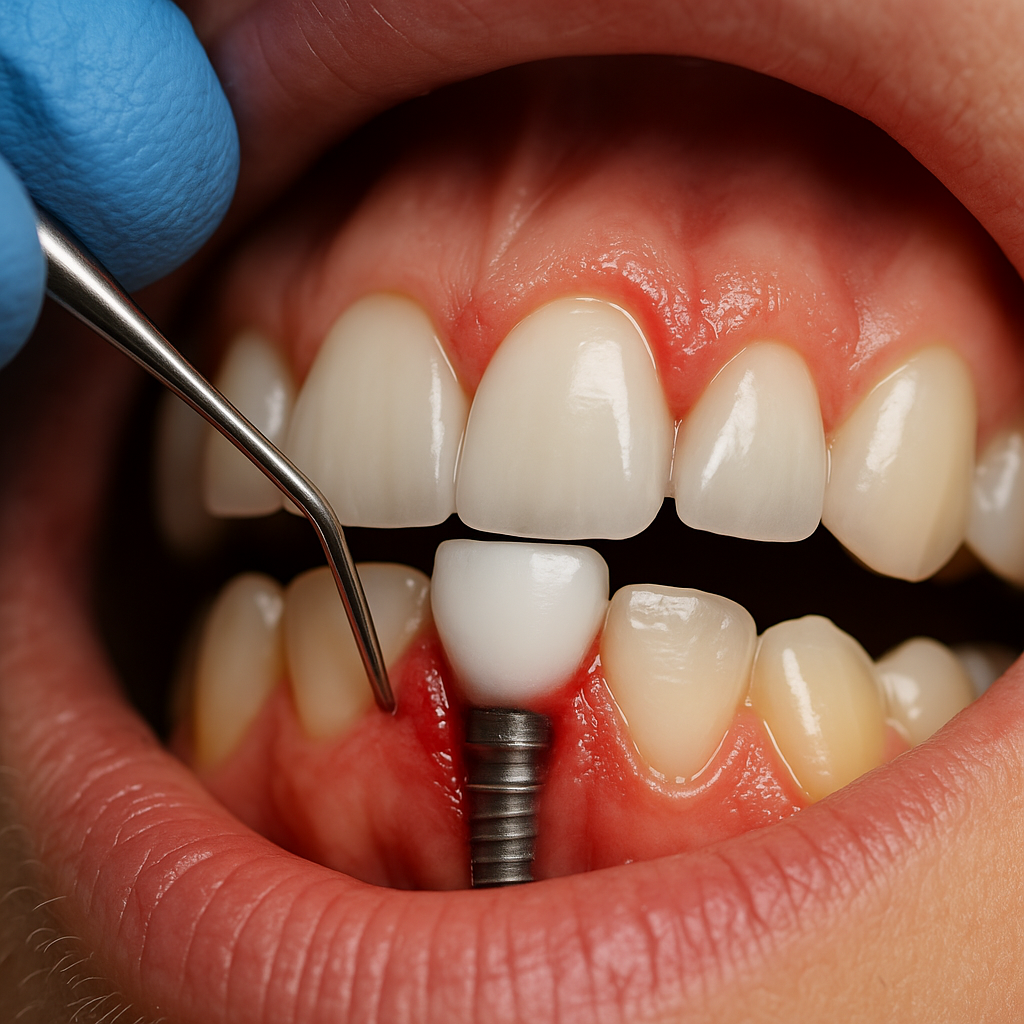
Gum recession around implants exposes the metal implant surface or abutment, creating both aesthetic concerns and functional vulnerabilities. As gum tissue recedes, it often reveals the threads of the implant that were meant to remain below the gumline, creating difficult-to-clean areas that harbor bacteria. This exposure accelerates the inflammatory process in a destructive cycle.
Beyond aesthetics, recession indicates underlying bone loss that threatens implant stability. The pattern of recession offers important diagnostic information—symmetrical recession around the entire implant differs from localized defects that might indicate specific problems with restoration contours or oral hygiene access.
4. Mobility or Loosening of the Implant
Any detectable movement of an implant or its restoration represents an advanced complication requiring immediate attention. Unlike natural teeth that have slight physiologic mobility from their periodontal ligament, implants should be completely rigid within the bone. Mobility might be detected when chewing, when pressing on the implant with your tongue, or during our clinical examination using specialized instruments.
5. Difficulty Chewing or Biting
- Discomfort or pain when applying pressure during chewing
- Changes in how your bite feels when teeth come together
- Sensations of movement or “give” when biting firmly
- Food impaction or trapping around the implant area
- Avoiding certain foods due to implant discomfort
These functional changes often indicate either mechanical problems with the implant components or inflammatory changes in the supporting tissues. Even subtle changes in how your bite feels should prompt evaluation, as early intervention often prevents more serious complications.
In some cases, bite problems develop gradually as other teeth shift position or wear down, creating new pressure patterns on the implant. Regular check-ups help identify these changes before they cause damage to your implant or restoration.
Many patients mistakenly believe these symptoms will resolve on their own, but implant complications typically worsen without professional intervention. The longer treatment is delayed, the more complex and costly the required interventions become, and the lower the chances of successfully saving the implant.
Advanced Diagnostic Techniques at Sound Surgical Arts
Our Diagnostic Protocol for Implant Complications
At Sound Surgical Arts, we employ a comprehensive diagnostic approach that combines clinical evaluation, advanced imaging, and microbiological assessment when necessary. This multi-faceted evaluation allows us to develop precise, targeted treatment plans for each unique implant situation.
Accurate diagnosis forms the foundation of successful implant rescue treatment. Our practice utilizes state-of-the-art diagnostic technologies that provide detailed information about the condition of your implant and surrounding tissues. This precision allows us to develop targeted treatment plans with predictable outcomes.
During your implant evaluation appointment, we’ll conduct a thorough assessment that includes detailed history-taking about your implant, review of previous records, comprehensive clinical examination, and appropriate imaging studies. We’ll evaluate not just the implant itself, but also contributing factors like bite forces, oral hygiene accessibility, and systemic health considerations.
Our diagnostic approach aims to identify not just the current condition of your implant but also the underlying causes of the problem. This comprehensive understanding allows us to address both the immediate symptoms and the root causes, improving long-term outcomes.
State-of-the-Art Technology for Optimal Results
At Sound Surgical Arts, we’ve invested in advanced technology specifically designed for implant diagnostics and treatment. Our digital cone beam CT imaging provides three-dimensional views of your implant, surrounding bone, and anatomical structures with exceptional clarity. This allows us to precisely evaluate bone levels, identify hidden infections, and plan surgical approaches with millimeter accuracy. Learn more about our ailing or failing implant services.
Sedation Options for Anxious Patients
We understand that dental anxiety can prevent patients from seeking timely treatment for implant problems. Our practice offers multiple sedation options ranging from nitrous oxide (“laughing gas”) to oral conscious sedation and IV sedation. These comfortable, safe options help anxious patients receive the care they need without stress or discomfort. Your comfort is our priority throughout the treatment process.
Preventing Future Implant Problems: Your Home Care Guide
The most effective approach to implant complications is prevention. With proper maintenance, dental implants can provide decades of reliable function. Preventive care requires partnership between you and our team—your daily home care combined with professional monitoring and maintenance.
Implants lack the natural protective mechanisms of teeth, making them more vulnerable to bacterial damage when inadequately maintained. Implementing a consistent, thorough home care routine specifically designed for implants significantly reduces your risk of complications and extends the lifespan of your investment.
Daily Cleaning Techniques for Implant Health
Effective implant cleaning requires specialized tools and techniques. Use a soft-bristled toothbrush (manual or electric) with non-abrasive, fluoride-free toothpaste designed for implants. Clean around implants at least twice daily, taking extra time to thoroughly clean all surfaces. For areas between implants or under bridges, use implant-specific floss, interdental brushes, or water flossers with implant attachments. Antimicrobial mouth rinses can provide additional protection, particularly for patients with higher risk profiles.
Professional Maintenance Schedule
Professional implant maintenance differs from standard dental cleanings. We recommend that implant patients maintain 3-4 month recall appointments with specially trained hygienists who use implant-safe instruments and protocols. These visits include a detailed assessment of implant health indicators, professional biofilm removal, and reinforcement of home care techniques. Early detection of potential problems during these regular visits often prevents the development of more serious complications.
Risk Factor Management
Managing your individual risk factors plays a crucial role in long-term implant success. For patients with grinding habits, we fabricate custom night guards to protect implants from excessive forces. Smokers are strongly encouraged to quit, as tobacco use significantly increases implant complications. Patients with diabetes benefit from maintaining tight glycemic control, while those with osteoporosis should discuss medication management with both their physician and our surgical team. Your personalized prevention plan will address your specific risk profile.
Schedule Your Implant Evaluation Today
If you’re experiencing any concerning symptoms with your dental implant, don’t wait for the problem to worsen. Early intervention dramatically improves outcomes and often allows for simpler, more conservative treatment options. Contact Sound Surgical Arts today at (253) 833-7800 to schedule your comprehensive implant evaluation with our specialty team. We serve patients throughout Tacoma, Gig Harbor, Vashon Island, and surrounding communities with expert implant care.
Remember that even stable, comfortable implants benefit from regular professional evaluation. If it’s been more than six months since your last implant check-up, we recommend scheduling an appointment to ensure the continued health of your dental investment.
Frequently Asked Questions
We understand you may have questions about dental implant complications and treatment options. Here are answers to some common questions we receive from patients concerning ailing and failing implants.
How long does it take to treat a failing dental implant?
Treatment timelines vary significantly based on the nature and severity of the implant problem. Early-stage issues like peri-implant mucositis often respond to non-surgical treatment within 2-4 weeks. More advanced cases involving bone loss typically require surgical intervention with healing periods of 3-6 months.
The complete treatment process may involve multiple phases: initial therapy to control infection, surgical treatment to address bone defects, a healing period, and restoration modification if needed. Throughout this process, we’ll provide clear timelines and expectations based on your specific situation.
For severe cases requiring implant removal and replacement, the total treatment time may extend to 9-12 months to allow for extraction healing, bone regeneration, placement of a new implant, and final restoration. However, many implant complications can be successfully managed without removal when addressed promptly.
- Non-surgical therapy: 2-4 weeks
- Surgical treatment with bone regeneration: 3-6 months healing
- Implant removal and replacement: 9-12 months total treatment time
- Maintenance therapy: Ongoing at 3-4 month intervals
At your consultation, we’ll provide a personalized treatment timeline based on your specific diagnosis and treatment needs. Our goal is always to resolve implant problems as efficiently as possible while ensuring optimal long-term results.
Will my insurance cover treatment for my ailing implant?
Most dental insurance plans provide some coverage for the treatment of implant complications, though coverage levels vary significantly between policies. Diagnostic procedures, non-surgical treatments, and some surgical interventions are commonly covered at similar rates to periodontal treatments for natural teeth. Our experienced insurance coordinators will verify your benefits and provide a clear breakdown of expected coverage before beginning treatment. For patients with limited or no insurance coverage, we offer financing options to make treatment more accessible.
Can I still get a new implant if my current one fails completely?
In most cases, yes. Even after an implant failure, replacement with a new implant is often possible once the site has been properly treated. The process typically involves removal of the failed implant, thorough debridement of the site, and frequently bone regeneration procedures to rebuild adequate support for a new implant. Success rates for replacement implants are good when the underlying causes of the initial failure are identified and addressed.
Factors influencing the feasibility of replacement include the amount of remaining bone, the reason for the initial failure, and your overall health status. During your consultation, we’ll evaluate these factors and discuss whether a replacement implant or an alternative tooth replacement option would be most appropriate for your situation.
Is implant treatment painful?
We prioritize your comfort during all implant treatments. Using advanced local anesthesia techniques, most patients report minimal discomfort during procedures. For surgical interventions, we offer various sedation options ranging from nitrous oxide to IV sedation that can virtually eliminate awareness of the procedure. Post-treatment discomfort is typically well-managed with prescribed or over-the-counter pain medications, and most patients report returning to normal activities within 1-2 days following treatment.
Many patients are surprised by how comfortable the treatment process is compared to their expectations. Our gentle approach, combined with appropriate pain management protocols, ensures that fear of discomfort doesn’t prevent you from receiving the care your implant needs.
What percentage of dental implants can be saved once they start failing?
Treatment success rates vary depending on the severity of the condition and how quickly it’s addressed. For early-stage problems (peri-implant mucositis), success rates with appropriate treatment exceed 90%. For moderate peri-implantitis, approximately 60-70% of implants can be successfully maintained with surgical intervention and ongoing maintenance. Advanced cases with significant bone loss and mobility have lower success rates, but even in these situations, we’re often able to save implants that might be deemed hopeless in general practice settings.
The key factor influencing success is early intervention. Implant problems identified and treated in their initial stages have dramatically better outcomes than those that have progressed to advanced disease. This underscores the importance of regular implant check-ups and prompt attention to any concerning symptoms.
At Sound Surgical Arts, our specialized training and experience in implant rescue procedures allow us to offer treatment options for even complex implant complications. We’re committed to helping you maintain your dental implant investment for years to come with comprehensive, state-of-the-art care from our dedicated team.
Dental implants are a popular solution for missing teeth, but sometimes they can encounter issues. If you are experiencing problems with your dental implants, it’s important to seek professional advice. Learn more about ailing or failing implants and explore potential solutions to ensure your oral health is maintained.